Why the front of the thigh is different
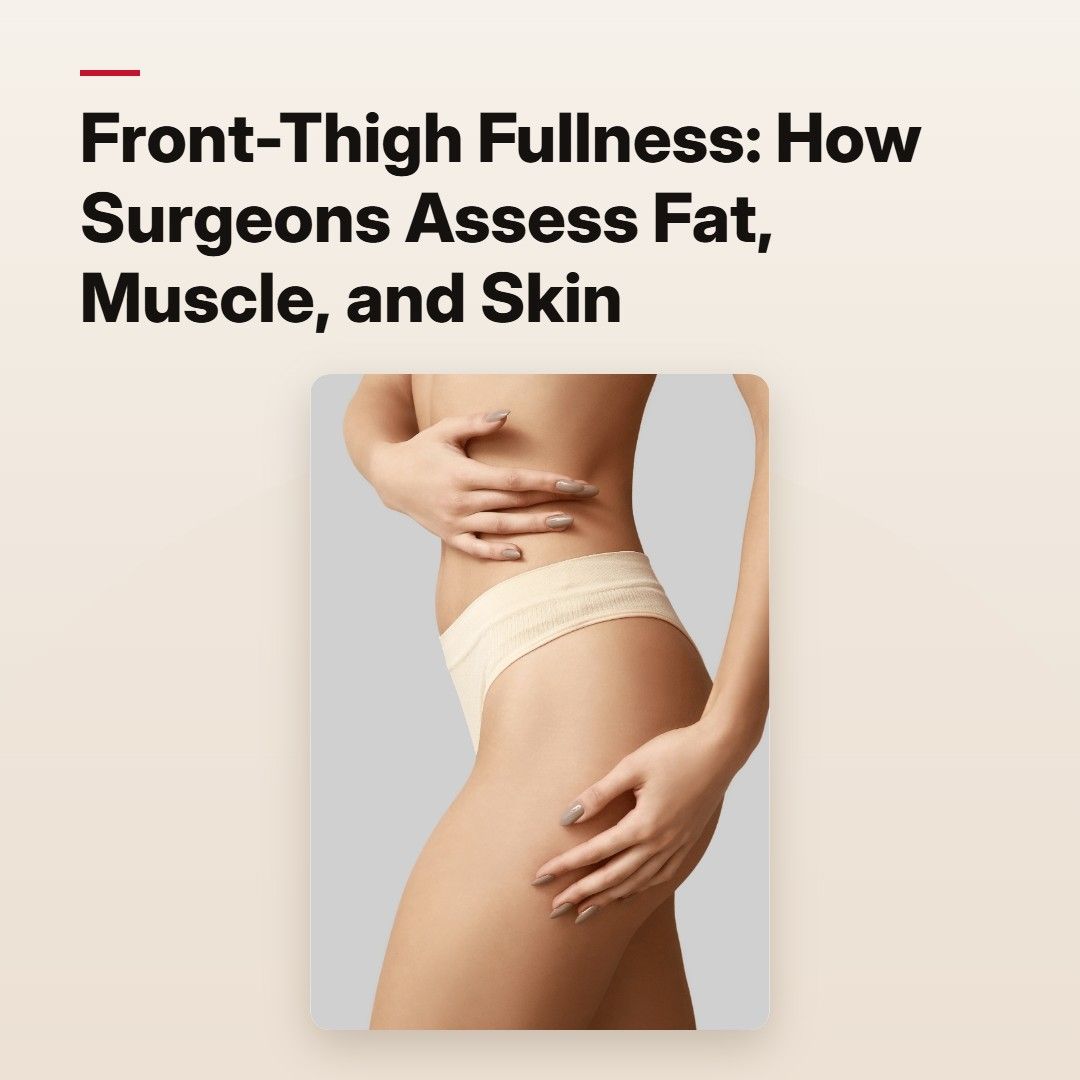
Fullness on the front of the thigh is a less common reason for liposuction than the inner or outer thigh, but it does bother many people, particularly in fitted trousers or when sitting. The front thigh is dominated by the large quadriceps muscles, and the fat layer over them is often thinner than people expect. This means that what looks like fat may partly be muscle, and the skin can show irregularities more easily after treatment. A detailed assessment helps decide whether liposuction is likely to make a worthwhile difference.
It is also an area that is seen from many angles, including from above when you look down at your legs while sitting. That view can exaggerate fullness, which is another reason an objective assessment is useful.
The three layers involved
Front-thigh fullness usually comes from a combination of:
- Fat: the soft layer between skin and muscle, which liposuction can reduce.
- Muscle: the quadriceps, which can be large in active people.
- Skin: which may be firm or loose depending on age and weight history.
The balance between these three determines how much change is possible.
Distinguishing fat from muscle
The surgeon usually examines the front thigh with the leg relaxed and then with the muscle tensed, for example by straightening the knee firmly. Muscle becomes harder and more defined when tensed, while fat stays soft. A pinch test while the muscle is relaxed shows how thick the fat layer is. If the pinch is thin and the fullness becomes firm with contraction, muscle is likely the main contributor. Ultrasound can sometimes measure fat thickness more precisely when the picture is unclear.
Assessing the skin
Skin on the front of the thigh is usually thicker than on the inner thigh, which can help it retract. However, it can still lose elasticity with age, weight changes or sun exposure. The surgeon pinches and releases the skin to see how quickly it returns, and looks for crepey texture or folds above the knee. If skin quality is poor, removing fat may leave it looking loose or uneven, so this is weighed alongside the amount of fat present.
Photographs taken from the front and side, standing and sitting, help record these details and give a clear baseline for judging the result later.
Common patterns of front-thigh fullness
People tend to present with a few typical patterns:
- Fullness in the upper front thigh near the hip crease.
- A rounded bulge in the middle of the front thigh.
- Fullness just above the knee that blends into the front thigh.
- Front-thigh fullness that continues around to the inner thigh.
Identifying the pattern helps decide where treatment should focus and how it should blend into surrounding areas.
Each pattern has a slightly different plan, so describing which part bothers you most is genuinely helpful during the consultation.
How liposuction is planned
When fat is a significant part of the fullness, liposuction is usually planned conservatively because the fat layer is relatively thin:
- Even, gentle reduction to avoid dents or grooves.
- Blending into the inner thigh, outer thigh and knee for a continuous shape.
- Careful technique to protect the smoothness of the skin surface.
- Leaving enough fat to keep the front thigh looking natural.
Over-treatment in this area can create visible irregularities that are difficult to correct.
When liposuction may not help much
If muscle makes up most of the fullness, liposuction will not change the overall size much. Some people with large quadriceps choose to adjust their training, focusing less on heavy lower-body exercises that build bulk. Others accept the muscular shape once they understand where the fullness comes from. If loose skin is the main issue, a thigh lift may be discussed, although this is a larger procedure with significant scarring.
Questions to bring to your consultation
- How much of my front-thigh fullness is fat, and how much is muscle?
- Is my skin likely to retract well?
- How would you blend treatment into the rest of my thigh?
- How much change is realistic for my anatomy?
- Would changing my exercise routine affect the result?
A clear assessment of fat, muscle and skin helps you decide whether front-thigh liposuction is likely to give the result you hope for. Many people find that a modest, smooth reduction combined with treatment of neighbouring areas makes the whole leg look more balanced than focusing on the front thigh alone.