Shape and texture are different problems
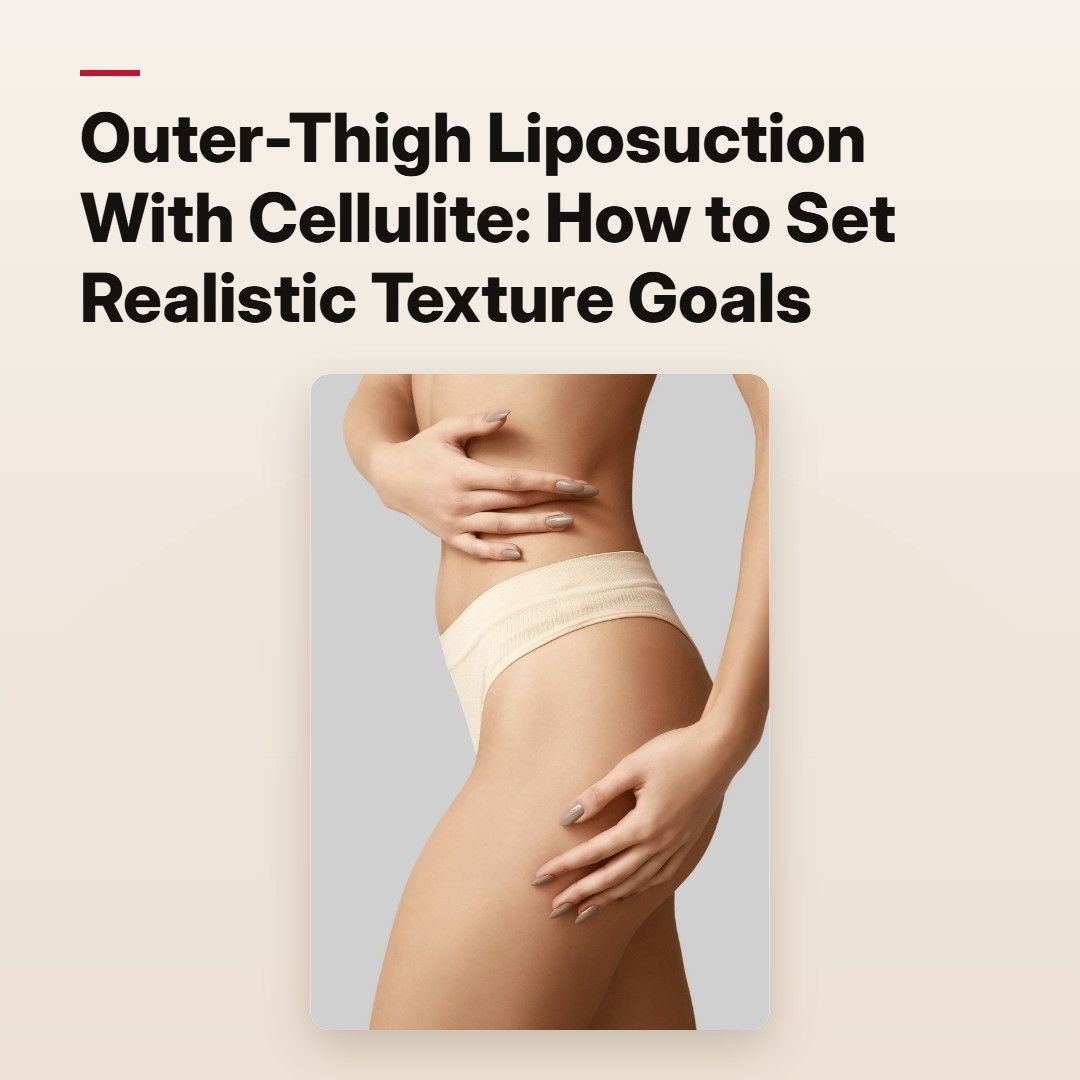
Many people who consider outer-thigh liposuction also have cellulite in the same area. It is important to understand that liposuction mainly changes shape, not texture. It removes volume from the fat layer, which can slim the outer thigh and smooth the side profile. Cellulite, on the other hand, is a surface texture caused by the structure of the skin and its connections to deeper tissue. Liposuction does not reliably remove cellulite and, in some cases, can make it more noticeable. Setting realistic texture goals helps avoid disappointment.
What cellulite is
Cellulite is very common, especially in women, and is not a sign of poor health. It occurs because:
- Fibrous bands connect the skin to the deeper tissue.
- Fat between these bands pushes upward against the skin.
- The bands pull down, creating dimples.
- Thinner skin makes the pattern more visible.
- Hormones, genetics and age influence how pronounced it is.
Because these structures remain after liposuction, the texture usually does not disappear.
Because cellulite is so common, many surgeons describe it as a normal feature of skin rather than a flaw. Thinking of it this way can make it easier to set goals that focus on shape, where liposuction is most effective.
How liposuction can affect cellulite
The effect of liposuction on cellulite varies. When the fat layer is reduced evenly and the skin retracts well, the outer thigh may look smoother overall, simply because there is less bulging. However, if the skin is thin or loose, reducing the fat can leave the dimples more visible. Uneven fat removal can also create new irregularities. This is why surgeons often recommend conservative treatment in areas with significant cellulite, focusing on improving shape rather than chasing texture.
How the thighs are assessed
The surgeon looks at your outer thighs in good light while you stand, and sometimes while you tense your muscles. They note:
- The size and position of the outer-thigh fat.
- The type and depth of cellulite dimples.
- Skin thickness and elasticity.
- Any existing irregularities or dents.
- How the outer thigh blends into the hip and buttock.
Photographs in consistent lighting help record the texture before treatment.
Lighting matters a great deal. Overhead light makes dimples look deeper, while soft front lighting can hide them. Using the same lighting for before and after photos is the only fair way to compare texture.
Treatments aimed at cellulite
Several treatments are designed specifically for cellulite, and some can be combined with liposuction:
- Procedures that release the fibrous bands beneath the dimples.
- Energy-based treatments intended to improve skin quality.
- Injectable or topical options that aim to improve texture.
- Fat grafting into deeper dimples in selected cases.
Results vary considerably between individuals, and some effects are temporary. Discussing what each option can realistically achieve is important.
Setting realistic goals
A useful way to think about the outcome is to separate shape goals from texture goals. A realistic shape goal might be a slimmer outer thigh with a smoother side profile in clothing. A realistic texture goal might be a mild improvement in some dimples, not completely smooth skin. Agreeing on these goals with your surgeon before surgery makes it easier to judge your result. Many people are satisfied once they understand that improved shape is the main benefit.
Recovery and texture during healing
During recovery, swelling can temporarily make the skin look smoother or more uneven. Compression garments help the skin settle, but they should fit evenly to avoid creating ridges. Some surgeons recommend massage or lymphatic drainage techniques after surgery, although practices vary. The final texture usually becomes clearer after several months. Keeping your weight stable afterwards helps preserve both shape and texture.
Hydration, gentle activity and avoiding large weight swings are simple habits that support how the skin looks long term.
Questions to bring to your consultation
- How much will liposuction change the shape of my outer thighs?
- Is my cellulite likely to look better, worse or the same?
- Would a cellulite-specific treatment help alongside liposuction?
- How will you avoid creating new irregularities?
- What should I realistically expect in terms of texture?
Being clear about the difference between shape and texture helps you set goals that outer-thigh liposuction can actually meet. Asking to see results in good, consistent lighting is also worthwhile, because flattering light can hide texture and give a misleading impression of what is achievable.