What lipedema is
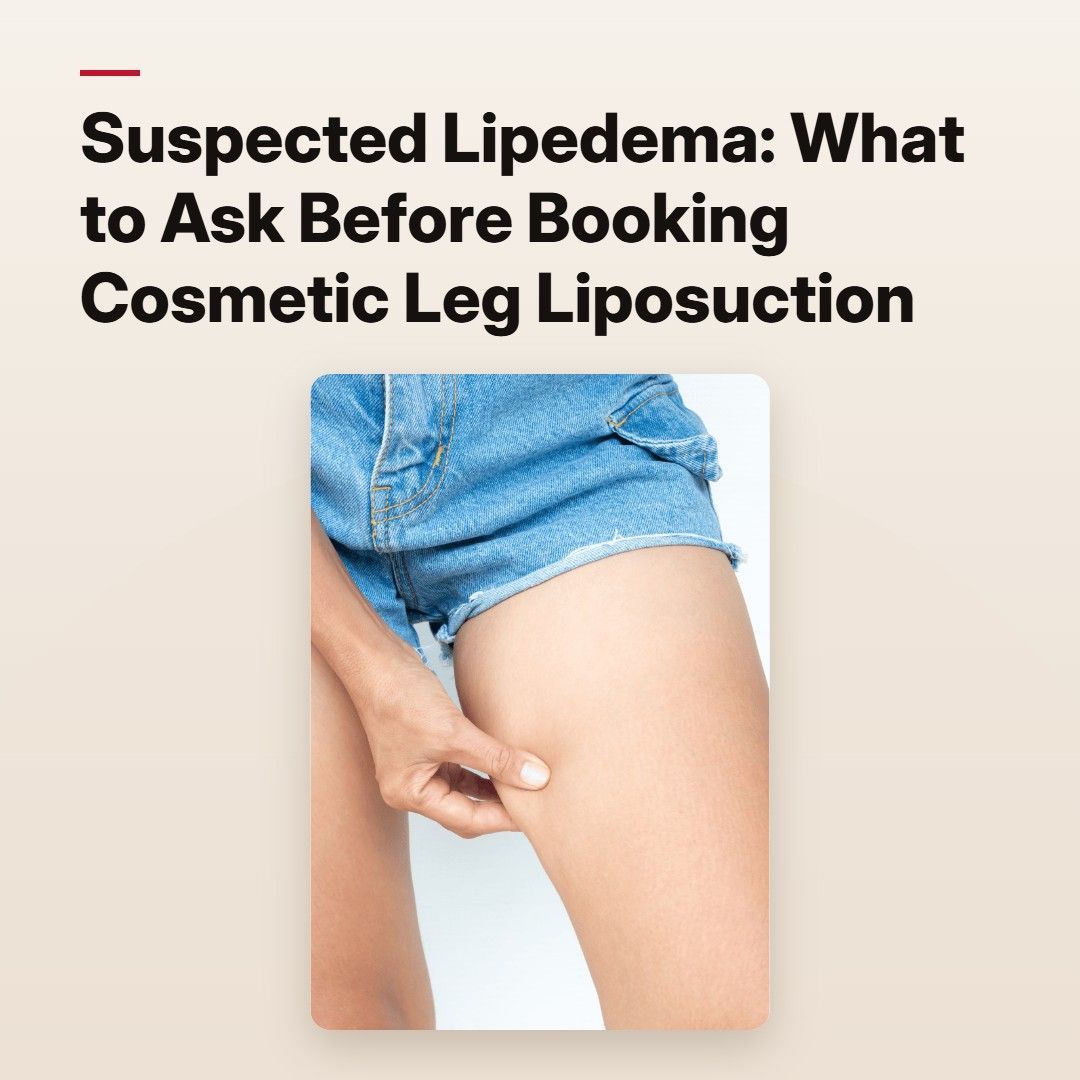
Lipedema is a chronic condition in which fat builds up abnormally, usually in the legs and sometimes the arms, while the hands and feet are spared. It mostly affects women and often begins or worsens around puberty, pregnancy or menopause. The fat is typically symmetrical, may feel tender or painful, and bruises easily. It often does not respond to diet and exercise in the way ordinary fat does. Because lipedema is a medical condition rather than a cosmetic concern, it is important to recognise it before booking standard cosmetic leg liposuction.
Signs that may suggest lipedema
Several features can point toward lipedema rather than ordinary fat distribution:
- Disproportionately large legs compared with the upper body.
- Fat that stops abruptly at the ankles, creating a cuff-like appearance.
- Tenderness, aching or heaviness in the legs.
- Easy bruising without obvious injury.
- Limited change in leg size despite weight loss elsewhere.
- A family history of similar leg shape.
Why the distinction matters
Lipedema fat behaves differently from typical fat. It may be more fibrous, the tissue can be more sensitive, and the lymphatic system may be under strain. Standard cosmetic liposuction techniques may not address the condition appropriately, and aggressive treatment could potentially affect lymphatic function. People with lipedema often need a specialised approach that considers symptoms, long-term management and the risk of progression, not just appearance.
Recognising lipedema also matters for your own understanding. Many people with the condition have spent years believing their leg shape was their fault, and learning that it is a recognised medical condition can change how they approach treatment.
How lipedema is assessed
There is no single test for lipedema, so diagnosis relies on history and examination. A doctor or surgeon familiar with the condition will look at:
- The distribution of fat and whether the feet are spared.
- Skin texture and the presence of nodules in the fat.
- Pain, tenderness and bruising.
- Signs of lymphatic involvement, such as swelling that leaves a dent when pressed.
- Your weight history and response to diet.
Imaging or a referral to a specialist may be suggested if the picture is unclear.
It is also important to rule out other causes of leg swelling, such as lymphoedema, vein disease or problems with the heart or kidneys, which can look similar but need very different care.
Treatment options for lipedema
Management of lipedema usually combines several approaches:
- Compression garments to support the tissues and reduce discomfort.
- Manual lymphatic drainage and other physical therapies.
- Exercise that is gentle on the joints, such as swimming or walking.
- Weight management to prevent additional ordinary fat gain.
- Specialised liposuction techniques designed to protect lymphatic vessels.
The aim is often to reduce symptoms and improve mobility as well as shape.
No single approach suits everyone, and the right combination depends on your symptoms, the stage of the condition and your personal goals.
Questions to ask before booking surgery
If you suspect lipedema, these questions can help you make an informed decision:
- Do you think my leg fat could be lipedema rather than ordinary fat?
- What experience do you have treating lipedema specifically?
- Which technique would you use, and how does it protect the lymphatic system?
- How many sessions might be needed?
- What should I expect in terms of pain, swelling and recovery?
Recovery and long-term care
Recovery after liposuction for lipedema can involve more swelling and a longer period of compression than standard cosmetic liposuction. Many people need to continue compression and physical therapy for some time. While surgery may reduce volume and improve symptoms, lipedema is a long-term condition, and ongoing care is often needed. Understanding this helps set realistic expectations and plan support after surgery.
Having a plan for support at home during the first weeks, including help with daily tasks, can make recovery easier.
Finding the right support
If you think you may have lipedema, it can help to seek an assessment from a doctor familiar with the condition before booking any cosmetic procedure. Bringing photographs of your legs over time, details of your weight history and a description of your symptoms makes the assessment more useful. A clear diagnosis allows you to choose treatment that addresses both appearance and comfort in a safe, informed way. It also means that any surgery is planned around your long-term wellbeing rather than a short-term change in shape.