Medically reviewed by Dr. Kang Dae Won — Head Surgeon & Clinic Owner, BBAE Clinic. 10 years dedicated to liposuction; member, Korea Society for the Study of Liposuction.
Written by the BBAE international patient team from questions real patients ask us. Last reviewed . How we write & review
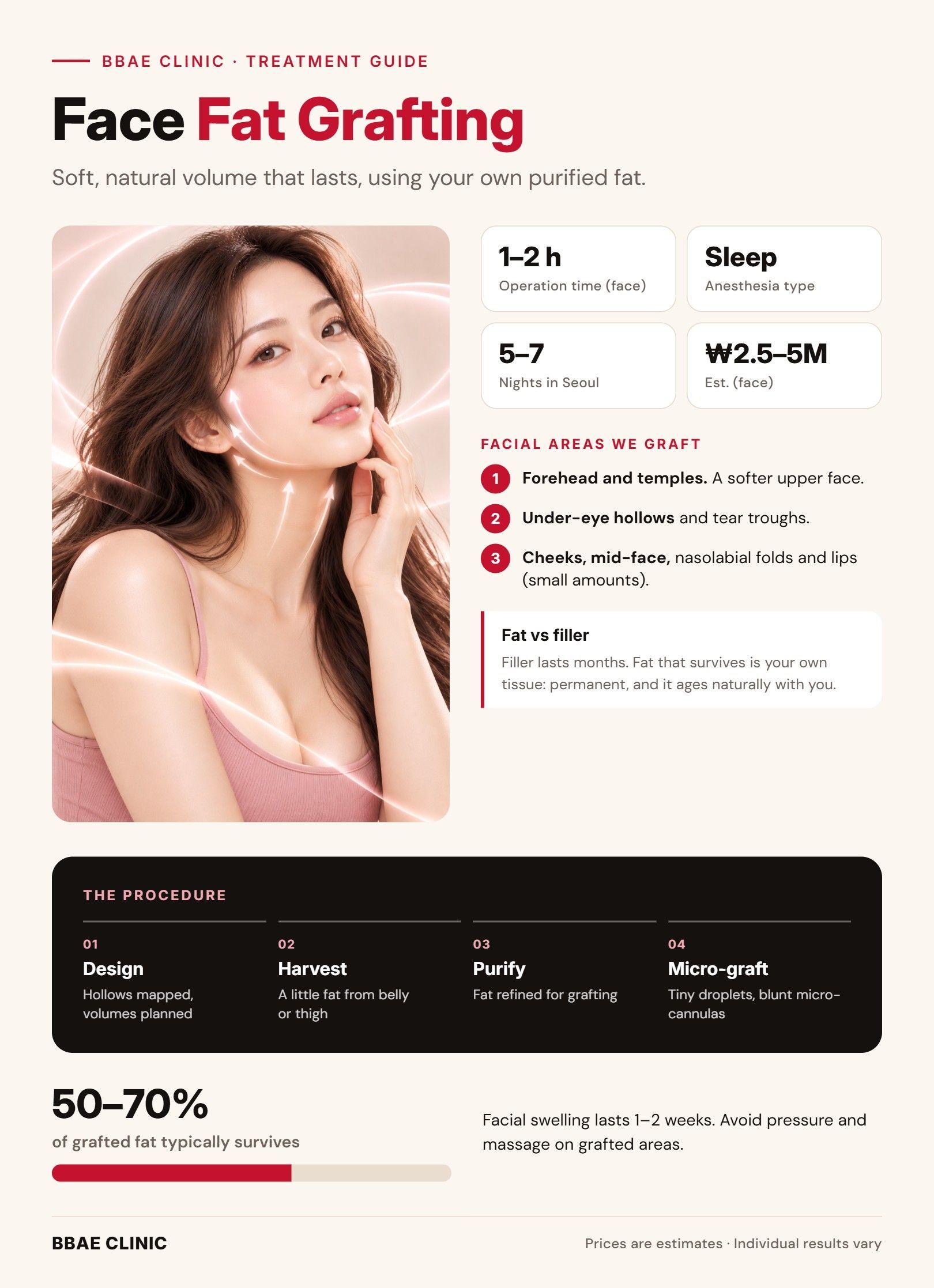
- Operation time
- ≈ 1–2 hours (face)
- Anesthesia
- Sleep anesthesia
- Stay in Seoul
- 5–7 nights
- Typical price (est.)
- ₩2.5–5M face (est.)
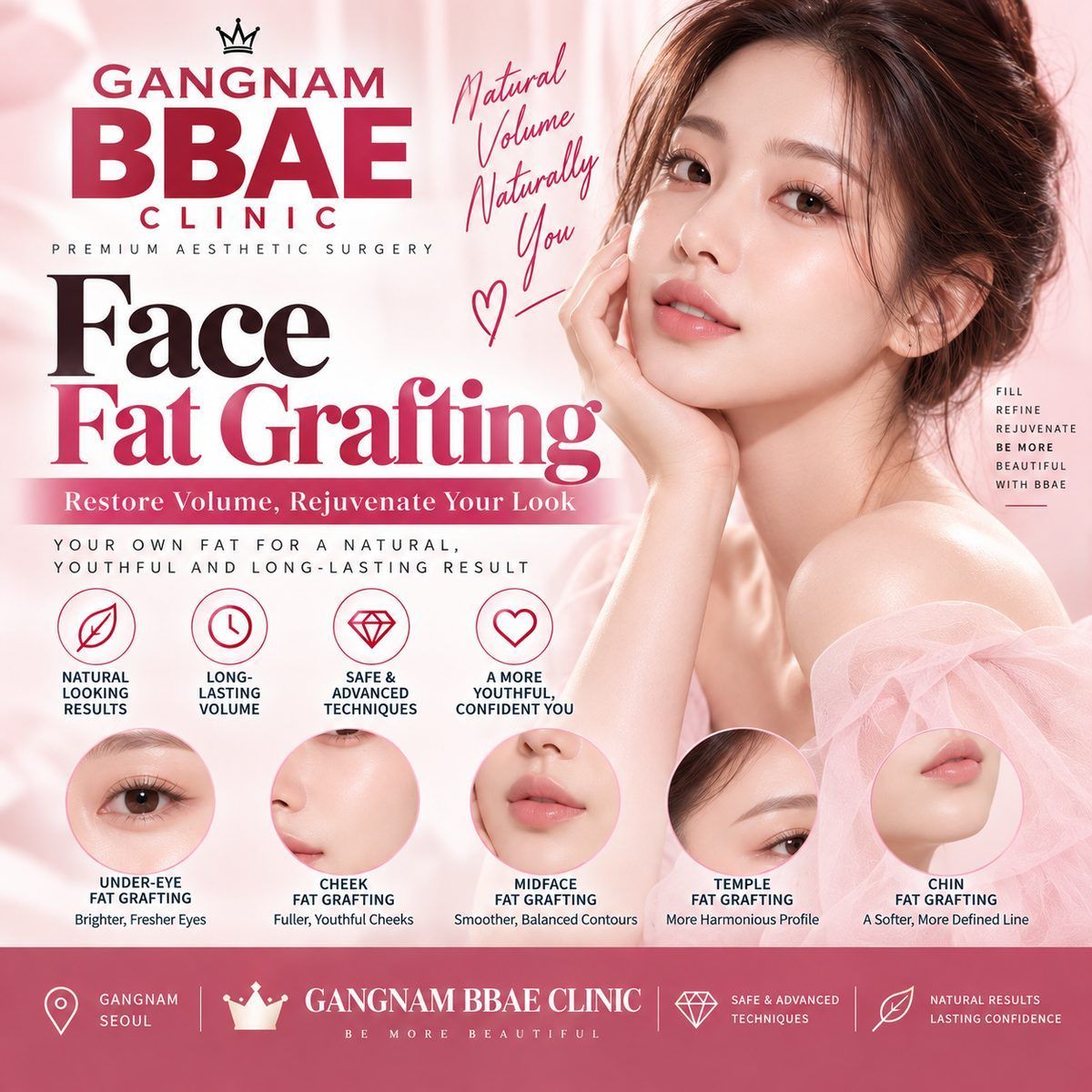
Facial areas we graft
- Forehead and temples — a rounder, softer upper face
- Under-eye hollows and tear troughs
- Cheeks and mid-face
- Nasolabial folds and lips (small amounts)
Fat grafting vs filler
Hyaluronic-acid fillers are quick but temporary, usually lasting months. Fat is your own tissue; once it survives, it's permanent and ages naturally with you. Fat grafting needs a small liposuction harvest and a little more recovery, so many patients combine it with body liposuction they wanted anyway.
The procedure
- Design We map hollows and plan volumes per area.
- Harvest A small amount of fat from the belly or thigh, with gentle technique.
- Purify & micro-graft Fat is refined and placed in tiny droplets with blunt micro-cannulas.
- Recovery Facial swelling for 1–2 weeks; avoid pressure and massage on grafted areas.
How much grafted fat survives?
Not all transferred fat survives — commonly about 50–70% in well-selected areas, depending on the area, technique and how well you follow aftercare. Surviving fat is permanent living tissue. Swelling makes the first weeks look bigger; the stable result shows at about 3 months. A second session is sometimes planned for more volume.
Body fat grafting
For breasts, hips and buttocks, see breast, hip and buttock fat transfer.
Risks and how we reduce them
Every liposuction carries risks, including bruising, swelling, temporary numbness, contour irregularity, fluid collection (seroma), infection and, rarely, blood clots. We reduce them with pre-operative health screening, sleep anesthesia monitored throughout, conservative safe-volume limits, round-tipped micro-cannulas, compression and structured aftercare. Specific to facial grafting: temporary swelling and lumpiness, over- or under-correction, and very rarely vascular complications — which is why we use blunt cannulas and small volumes. Read more: is liposuction safe in Korea?
Frequently asked questions
How long does facial swelling last after fat grafting?
Most visible swelling settles in 1–2 weeks; the result stabilises at about 3 months.
Will I need more than one session?
Sometimes, especially for deep hollows. The first session shows how much fat your body keeps.
Can I combine face grafting with face liposuction?
Yes — for example slimming the jawline while filling the temples or under-eyes.
How long should I stay in Seoul?
About 5–7 nights for face grafting.
Sources & medical references
- American Society of Plastic Surgeons — Liposuction
- Mayo Clinic — Liposuction: overview, risks and recovery
- NHS (UK) — Liposuction
This page is general information, not a diagnosis. A BBAE doctor confirms whether liposuction suits you after reviewing your photos and examining you in person. Prices are estimated Seoul market ranges, not quotes.