What a banana roll is
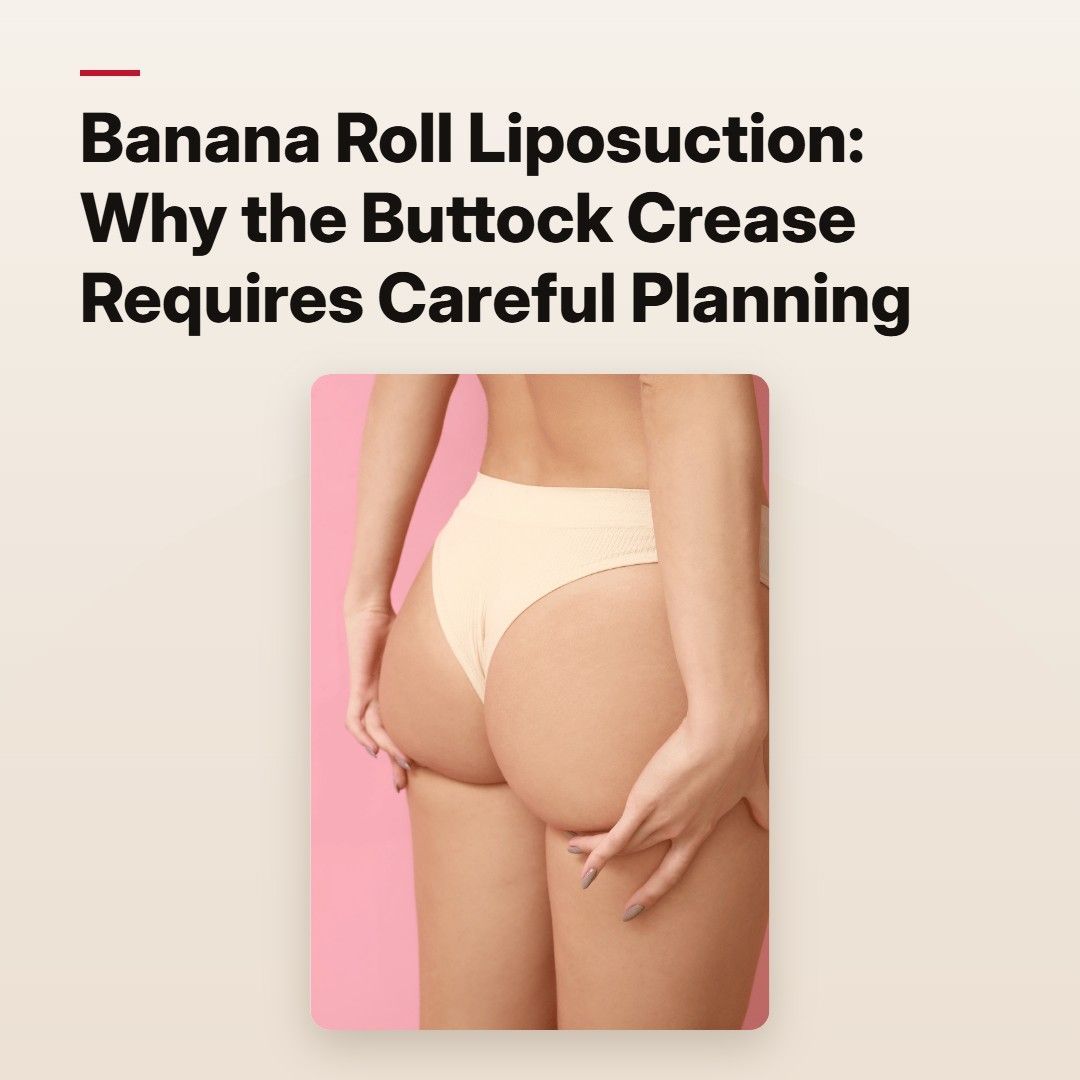
A banana roll is a small, curved fold of fat that sits just below the buttock crease, at the top of the back of the thigh. Its name comes from its shape, which follows the curve of the crease. Many people notice it in swimwear or fitted clothing, or when looking at photos from behind. Although it is a small area, it is one of the most delicate zones for liposuction. The buttock crease plays an important role in supporting the shape of the buttocks, so treatment here must be planned with great care.
It often becomes more noticeable after weight changes or with age, as the tissues below the buttocks lose some of their firmness.
Why the buttock crease is so important
The crease beneath the buttocks is created by strong fibrous connections between the skin and the deeper tissues. These connections act a bit like a sling, helping to hold the buttocks in position. If too much fat is removed from this area or the connections are disrupted, the crease can lengthen or drop. This can make the buttocks appear to sag, create a double fold, or leave an irregular line. These problems can be difficult to correct, which is why surgeons are cautious here.
How the area is assessed
The surgeon examines you from behind while you stand relaxed, then with your weight shifted from one leg to the other. They look at:
- The length and depth of the buttock crease on each side.
- The size and position of the banana roll.
- How the buttocks sit relative to the crease.
- Skin quality and any looseness at the back of the thigh.
- Differences between the left and right sides.
Bending forward and standing on tiptoe may also be used to see how the tissue moves.
Fat, skin or ptosis
Not every fold below the buttocks is caused by fat. Some people have loose skin or a degree of buttock sagging, called ptosis, that creates a similar appearance. In these cases liposuction may make the fold look worse, because removing fat can reduce support beneath sagging tissue. Pinch tests and careful observation help determine how much of the fold is fat. If sagging is the main issue, other approaches such as a lift may be discussed.
How treatment is planned
When fat is clearly the main cause, banana roll liposuction is usually conservative:
- Treating only the fatty fold, not the crease itself.
- Using small cannulas and gentle technique.
- Avoiding the fibrous attachments that form the crease.
- Blending into the back of the thigh for a smooth transition.
- Leaving enough fat to support the buttocks.
Markings are made while you stand, because the shape changes when you lie face down.
Combining with other areas
Banana roll treatment is often part of a broader plan for the thighs and buttocks. It may be combined with liposuction of the outer thighs or inner thighs, or with fat transfer to the buttocks to improve shape. Combining treatments can create a more balanced result, but it also requires careful planning so that each area supports the others. Removing fat from beneath the buttocks while adding volume above, for example, must be done with attention to how the crease will look afterwards.
Recovery and what to expect
After banana roll liposuction, swelling and bruising are common at the back of the thigh. Sitting may be uncomfortable for a few days. Compression garments help support the area, but they need to fit without digging into the crease. The final shape usually becomes clear over a few months. If the crease looks uneven early on, it is often due to swelling, but any concerns should be discussed at follow-up appointments.
Questions to bring to your consultation
- Is my banana roll mainly fat, skin or sagging?
- How will you protect the buttock crease during treatment?
- Should other areas be treated for a balanced result?
- What are the risks of a double fold or lengthened crease?
- How long until I see the final shape?
Because the buttock crease is so important for shape and support, choosing a surgeon who plans this area carefully is essential. It is worth asking how often they treat this zone and how they decide how much to remove, since a cautious, well-explained approach is one of the best signs that the crease will be protected.