What above-the-knee fat pads are
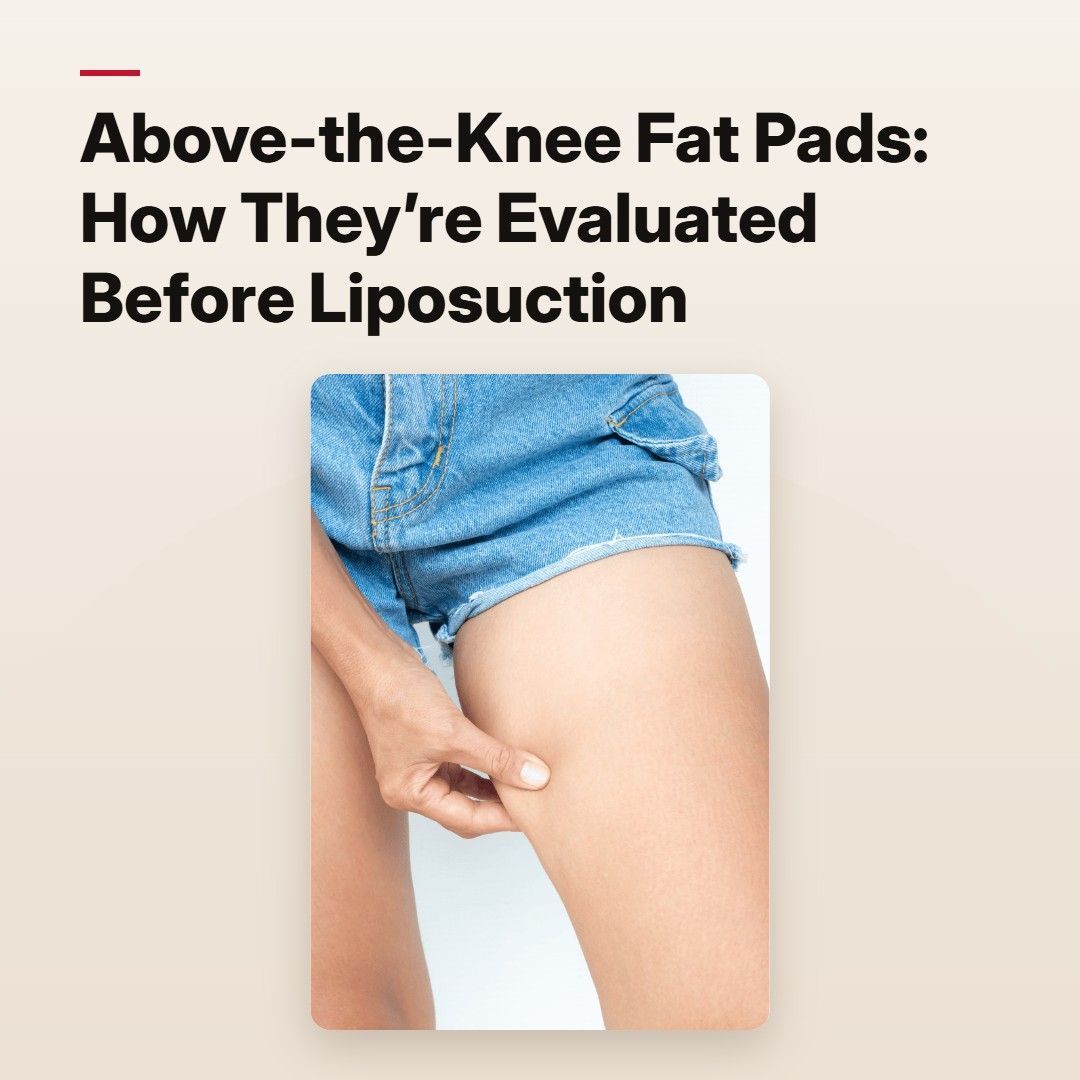
Above-the-knee fat pads are small collections of fat on the inner side of the knee or just above the kneecap. They can make the knee look rounded or soft, interrupting the line between the thigh and the lower leg. They are often resistant to exercise and may persist even at a stable, healthy weight. Because the area is small and visible in skirts, shorts and swimwear, many people consider liposuction to refine it. A careful evaluation is important to make sure the fullness is fat and that treatment will blend well with the rest of the leg.
Because the knee is a joint that bends constantly, any treatment has to look good both when the leg is straight and when it is flexed. This makes planning slightly different from larger, flatter areas such as the abdomen.
What can cause fullness around the knee
Not all knee fullness is fat. Possible causes include:
- A distinct fat pad on the inner knee.
- Fat continuing down from the inner thigh.
- Loose skin above the kneecap.
- Swelling from joint problems or fluid in the knee.
- Muscle bulk just above the knee in active people.
- Conditions such as lipedema that affect the legs.
How the knee area is examined
The surgeon looks at your knees while you stand with your legs straight, then with them slightly bent. They pinch the tissue on the inner knee and above the kneecap to judge fat thickness. They also look at how the inner thigh flows into the knee, since the two areas are often connected. Pressing on the skin helps detect swelling. If there is any suggestion of joint problems or unexplained swelling, a medical review may be recommended before considering cosmetic treatment.
Skin quality above the knee
Skin just above the kneecap can wrinkle and loosen with age. When fat is removed from this area, loose skin may become more visible, particularly when you bend the knee. The surgeon checks how the skin folds when you stand and how quickly it returns after a gentle pinch. Good skin elasticity improves the chance of a smooth result. If the skin is already quite loose, the improvement from liposuction may be modest.
Age is not the only factor. People who have lost a lot of weight may also have looser skin here, even at a young age, and this is worth mentioning during the consultation.
Planning treatment around the knee
Liposuction of the knee area is usually planned as part of the overall leg contour:
- Treating the inner knee fat pad where fat is clearly present.
- Blending into the lower inner thigh to avoid a step.
- Leaving a little fat to keep the knee looking natural.
- Considering the calves and ankles if they affect the overall line.
- Comparing both legs to keep the result balanced.
Small cannulas are generally used because the area is delicate and the fat layer is limited.
Avoiding common problems
The knee is an area where over-treatment can be quite noticeable. Removing too much fat can create dents or an uneven surface, especially when the knee bends. Incisions are usually kept small and placed in natural creases where possible. Surgeons often aim for a subtle change, enough to improve the line of the leg without making the knee look bony or hollow. This conservative approach usually produces a more natural look.
It is reasonable to ask the surgeon how they decide when to stop removing fat in this zone and how they check the contour during the procedure.
Recovery for the knee area
After knee liposuction, swelling can extend down toward the calf and ankle, because fluid moves with gravity. Compression garments that cover the leg are usually recommended. Walking is encouraged, but kneeling and intense lower-body exercise may be limited for a period. Bruising often settles within a few weeks, while the final shape can take a few months to appear. Mild firmness or numbness around the knee is common at first and generally improves.
Questions to bring to your consultation
- Is the fullness around my knee mainly fat?
- Is my skin likely to retract well after treatment?
- Should my inner thigh be treated as well for a smooth line?
- How much change is realistic in this small area?
- What restrictions will I have on kneeling and exercise?
Evaluating above-the-knee fat carefully helps make sure treatment refines the line of the leg in a natural way. Bringing photos in the clothes that make you most aware of your knees, such as a skirt or shorts, can help the surgeon see exactly which part of the contour matters most to you.