Why the lower back curve matters
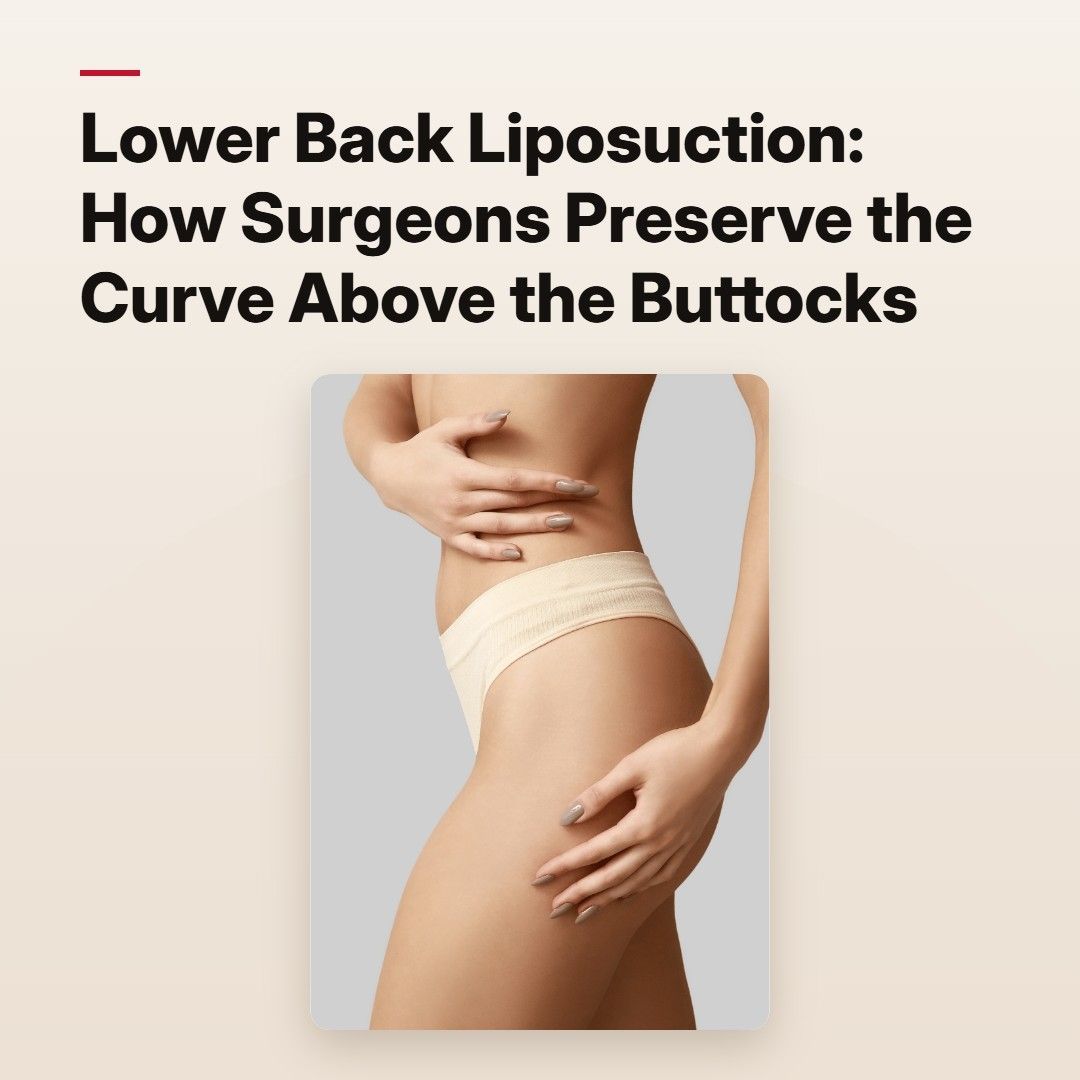
The lower back is one of the most important areas in body contouring, even though people rarely think about it when they first ask about liposuction. Seen from the side or behind, the inward curve of the lower back is what makes the buttocks look lifted and the waist look defined. Fat in this area can flatten that curve and create a straight line from the ribs to the hips. Liposuction can restore definition, but it must be done in a way that preserves and shapes the natural curve rather than simply removing tissue.
What creates the curve
The shape you see is the result of several layers working together:
- Spinal curvature: the natural inward curve of the lumbar spine, called lordosis.
- Pelvic tilt: how far your pelvis tips forward or back.
- Muscle bulk: the strong muscles running alongside the spine.
- Fat distribution: the soft layer that sits over the sacrum and lower back.
- Buttock projection: how far the buttocks extend behind the body.
Liposuction can change only the fat layer, so the other factors set the limits of what is achievable.
How the area is assessed
The surgeon looks at your back while you stand relaxed, then from the side to judge the depth of the curve. They pinch the fat over the lower back and the area just above the buttocks, often called the sacral area, to see how thick it is. You may be asked to bend forward and arch slightly so they can see how the skin and fat move. Comparing both sides helps reveal any asymmetry caused by posture or spinal shape.
Your surgeon may also ask about back pain, previous spinal problems or long periods of sitting at work. These details affect posture and can change how the lower back looks, so they are part of a complete assessment rather than a side note.
Where fat is usually removed
To sharpen the curve, treatment often focuses on specific zones:
- The flanks and upper hip rolls that blur the waist from behind.
- The central lower back, where a fat pad can flatten the curve.
- The transition between the back and the sides of the hips.
- Sometimes the upper back, if it affects balance in profile.
Treating these zones together helps create a smooth line from the waist into the buttocks.
Where fat is preserved
The area directly above the buttocks needs particular care. Removing too much fat over the sacrum can create a hollow, uneven or sharply angular appearance. A thin, even layer helps the skin drape smoothly and keeps the transition into the buttocks soft. Surgeons also avoid creating a visible step where treated and untreated areas meet. The aim is a gentle slope rather than a hard edge, because a gradual curve looks more natural when you move, sit and walk.
When fat transfer is combined
Some people want more buttock projection as well as a slimmer lower back. In these cases fat removed from the back and flanks may be transferred into the buttocks or hips. Reducing the lower back while adding volume below can make the curve look deeper. This approach has important considerations:
- Fat transfer to the buttocks carries specific safety risks that should be discussed in detail.
- Not all transferred fat survives, so results can vary.
- Sitting and sleeping restrictions often apply during recovery.
- A realistic plan depends on how much donor fat is available.
Recovery and how the curve settles
Swelling in the lower back can be significant and may hide the curve for several weeks. Compression garments help, but they need to fit well without creating folds at the waist. Sitting for long periods can increase discomfort and swelling, so short walks and regular changes of position are often recommended. Most people see the curve emerge gradually over a few months, and early unevenness usually improves as the tissue settles.
Questions to ask at your consultation
- How much of my flat lower back is caused by fat?
- Does my posture or spine shape limit the curve?
- Where will you preserve fat above the buttocks?
- Would fat transfer help, and what risks does it involve?
- How should I sit and sleep during recovery?
A plan that respects the natural curve of the lower back is what makes the result look balanced from behind and in profile. Asking how the surgeon will check the curve during surgery, and how they decide when to stop, is a useful way to understand their approach. A careful answer usually points to a plan built around your own anatomy.