Why the rib cage sets a limit
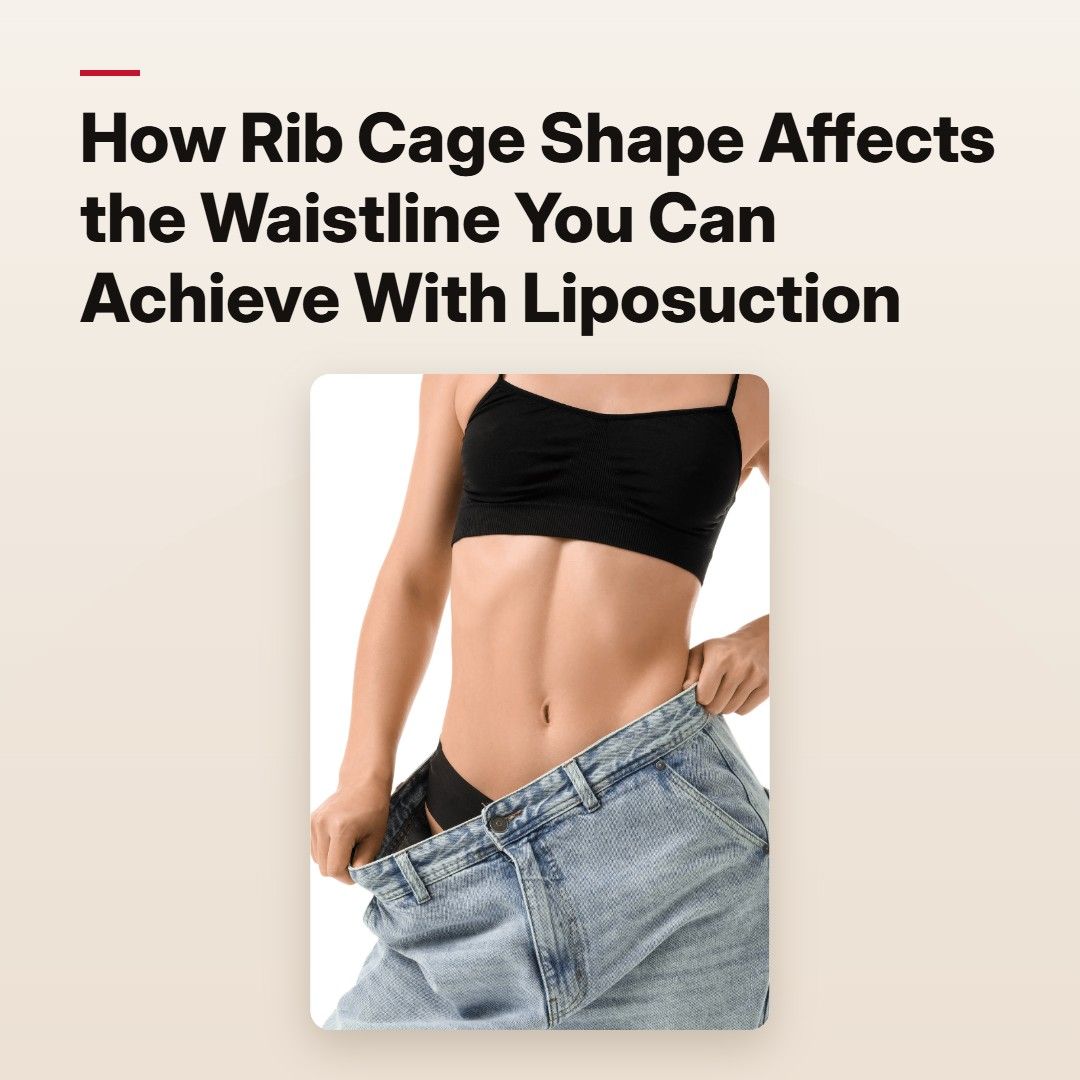
The waist is defined by soft tissue sitting over a frame of bone. Liposuction can reduce the soft tissue, but it cannot change the frame. The lower ribs form the upper boundary of the waist, and their width, angle and position decide how narrow the waist can look after fat is removed. Two people can lose the same amount of flank fat and end up with very different waistlines because their rib cages differ. Understanding this before surgery helps set goals that your skeleton can support.
This is not a reason to avoid liposuction, but it is a reason to judge the expected result against your own frame rather than against photographs of people with a different skeleton.
Rib cage features that matter
Several aspects of the rib cage influence the final shape:
- Width: a broad lower rib cage keeps the waist wider at its narrowest point.
- Flare: ribs that angle outward can create fullness under the chest.
- Height: a low-sitting rib cage leaves less space between ribs and pelvis.
- Symmetry: one side may sit higher or flare more than the other.
- Posture: a forward or arched stance changes how the ribs appear.
How the frame is assessed
During the consultation the surgeon looks at your torso from the front, back and side while you stand naturally and then stand tall. They feel along the lower ribs to judge where the bone ends and soft tissue begins. Pinch tests on the flanks show how much fat sits over the frame. Some people are surprised to learn that much of the width they see is bone, while others discover there is more soft tissue than they expected. Photographs help illustrate these findings.
Torso length and the space for a curve
The distance between the bottom of the ribs and the top of the hip bones plays a big role. A long torso gives more room for a gradual inward curve. A short torso, where the ribs sit close to the pelvis, leaves less space, so the waist can look straighter even after liposuction. In these cases the surgeon may focus on smoothing the flanks and improving the transition into the hips rather than trying to create a deep indentation that the frame cannot hold.
Rib flare and the upper waist
Flared lower ribs can create a visible bulge just below the chest, sometimes mistaken for upper belly fat. Liposuction may reduce soft tissue over this area, but the underlying angle of the ribs remains. Posture work and core strengthening can sometimes reduce the appearance of rib flare by improving how the rib cage sits. Being clear about how much of the fullness is bone helps avoid over-treating a thin fat layer in an attempt to change it.
What liposuction can realistically change
Within the limits of the frame, liposuction can still make a meaningful difference:
- Reducing flank and back fat to sharpen the side profile.
- Smoothing the transition between ribs, waist and hips.
- Improving balance between the left and right sides.
- Making clothes sit more neatly around the waist.
The improvement is usually most noticeable when soft tissue is the main contributor to width.
Many people find that a smoother, better-balanced waist matters more in everyday life than a dramatically smaller measurement. Clothing tends to fit more neatly, and the silhouette looks more even in photographs, even when the narrowest point has changed only modestly.
Options that are sometimes discussed
Some people ask about procedures that alter the rib cage itself, such as rib removal or reshaping. These are major operations with significant risks and are not part of routine liposuction. Most surgeons focus on soft-tissue contouring and, where appropriate, fat grafting to the hips to strengthen the curve visually. Clothing, posture and core training can also influence how the waist looks day to day.
Questions to bring to your consultation
- How much of my waist width is bone, and how much is fat?
- Does my torso length limit the curve I can achieve?
- Is rib flare contributing to fullness under my chest?
- Which areas would you treat to make the most of my frame?
- Would fat grafting to the hips improve the overall shape?
Knowing how your rib cage shapes your waist allows you to choose a plan that works with your body rather than against it. It also makes it easier to compare consultations fairly, because a plan built on an honest reading of your frame will usually promise less but deliver a result that looks more natural.