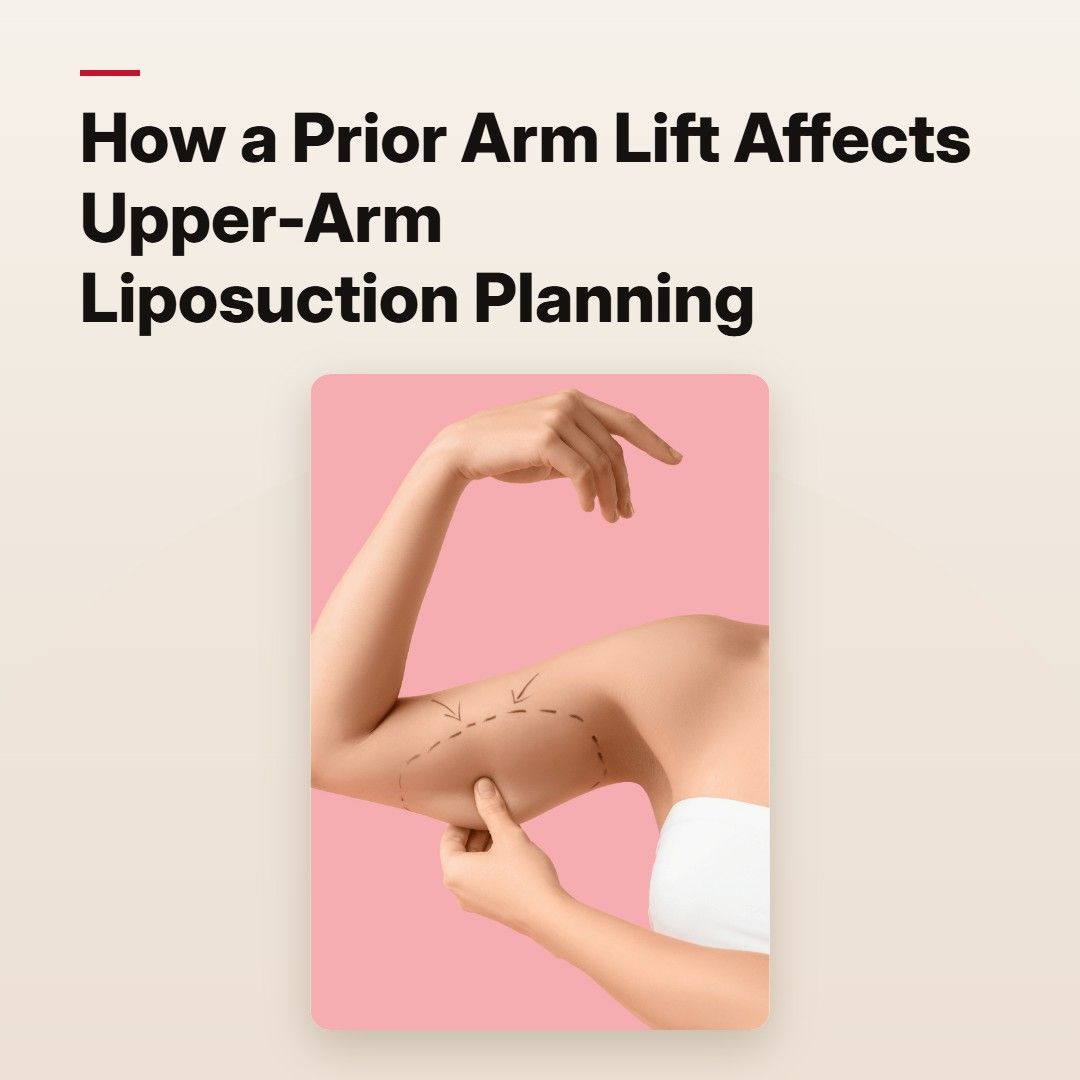
Why people consider liposuction after an arm lift
An arm lift, or brachioplasty, removes loose skin and fat from the upper arm, leaving a scar along the inner arm or underarm. Most people are pleased with the change, but some later notice remaining fullness near the elbow, at the back of the arm, or close to the armpit. Weight changes after surgery can also bring back some volume. Liposuction is often considered to refine these areas. Because the arm has already been operated on, planning needs to take the earlier surgery into account.
How an arm lift changes the tissue
The previous operation leaves several lasting changes:
- A long scar: usually on the inner arm, which may be tight or mobile.
- Internal scar tissue: forming between the skin and deeper layers.
- Altered drainage: lymphatic vessels in the arm may have been disrupted.
- Reduced skin laxity: the remaining skin is often tighter than before.
- Changes in sensation: numbness along the scar is common.
Each of these changes affects how fat can be removed safely. Scar tissue makes cannula movement less predictable, and altered drainage can mean swelling lasts longer than it would in an arm that has never been operated on.
Timing after the previous surgery
Most surgeons prefer to wait until the arm has fully healed before considering further treatment. Swelling after an arm lift can take many months to settle, and scars continue to mature for a year or more. Waiting gives a clearer picture of the true contour and allows any remaining fullness to be judged accurately. It also lets the surgeon see how the scar has healed, which affects where it is safe to work.
It is also helpful if your weight has been stable since the arm lift. If the remaining fullness appeared after weight gain, losing some of that weight first may reduce or even resolve the concern without further surgery.
What the examination focuses on
The surgeon examines both arms with them relaxed and raised, comparing their shape. They note where fullness remains and pinch the tissue to judge whether it is fat or skin. Particular attention is paid to the scar:
- Whether it is flat and mature or still red and raised.
- Whether it feels tight or restricts arm movement.
- Whether there are areas of widening or dog-ears at the ends.
- How firmly the skin is attached along the scar line.
Lymphatic drainage and swelling
An arm lift can affect lymphatic drainage, and some people notice longer-lasting swelling after the first operation. Adding liposuction may increase the risk of prolonged swelling in these cases. The surgeon will ask how your arms recovered the first time, whether swelling lingered, and whether you have any signs of chronic swelling now. If drainage problems are suspected, they may recommend a more conservative approach or a review by a specialist first.
How liposuction is planned around the scar
When liposuction is appropriate, the plan usually respects the earlier surgery:
- Avoiding heavy treatment directly beneath the scar.
- Focusing on areas of clear fat, such as near the elbow or the back of the arm.
- Using cautious techniques where scar tissue makes the fat firmer.
- Blending into the shoulder and forearm so the arm looks continuous.
Incisions are often placed near or within the existing scar where possible.
When another revision may be better
Sometimes remaining fullness is mainly skin rather than fat, particularly at the ends of the scar. In that case a small scar revision or extension may give a better result than liposuction alone. In other cases a combination works best. The surgeon should explain which approach suits your tissue and what each involves in terms of scarring and recovery, so you can decide which trade-offs you prefer.
Questions to bring to your consultation
- Is my arm fully healed from the previous surgery?
- Is the remaining fullness mainly fat or skin?
- How will you treat the area near the scar?
- Is there a risk of longer swelling because of my previous surgery?
- Would a scar revision help more than liposuction?
Bringing your operation notes and photos from before and after the arm lift helps the surgeon plan treatment that builds on your earlier result. Many people find that a modest refinement, carefully planned, is enough to make the arm look more even from shoulder to elbow.
- How long should I wear compression this time, and does my previous surgery change that?