Why forearm liposuction is less common
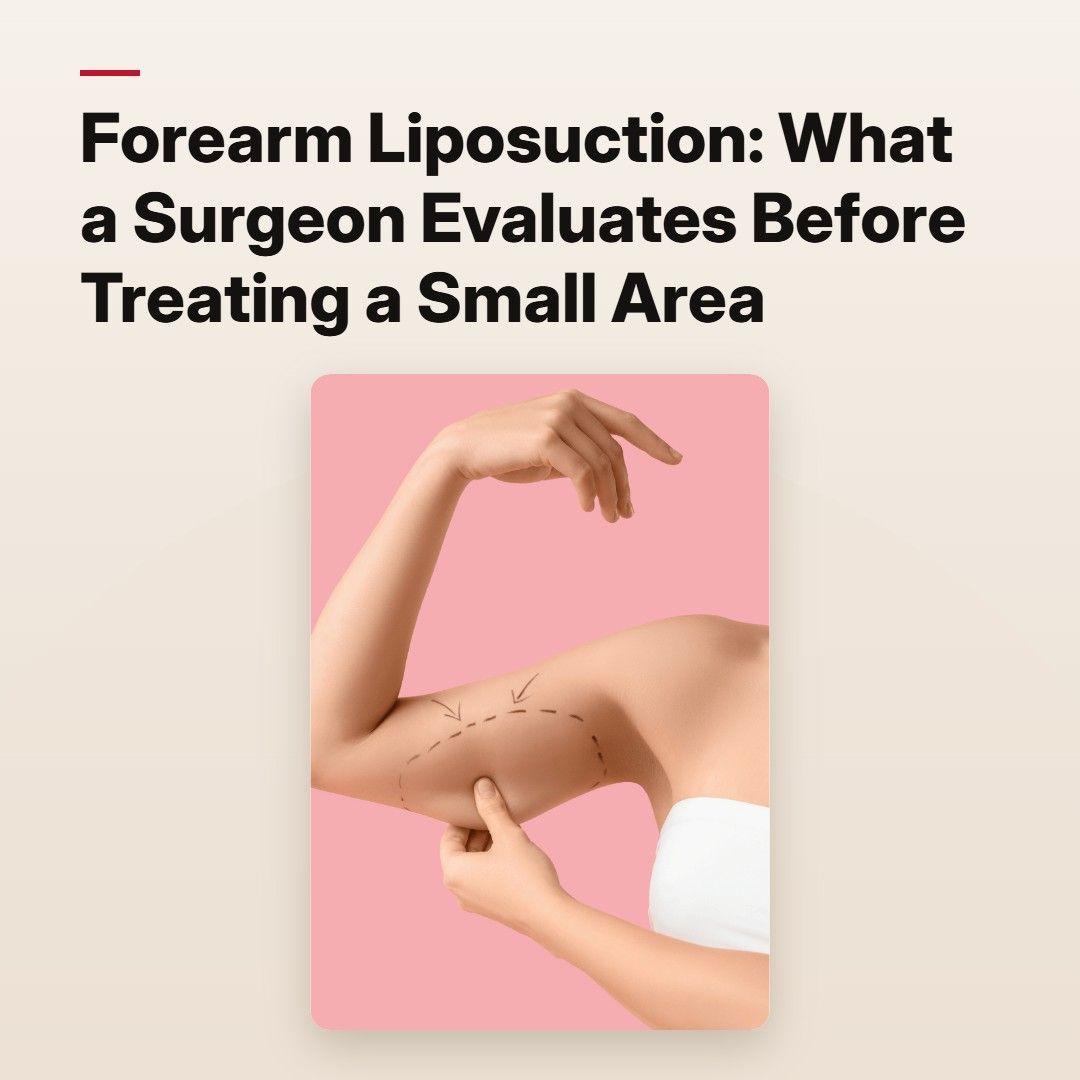
Liposuction is usually associated with larger areas such as the abdomen or thighs, but some people are bothered by fullness in the forearm, particularly just below the elbow. This area is less commonly treated, and it requires particular care. The forearm has a relatively thin fat layer, many nerves and blood vessels close to the surface, and skin that is visible in everyday life. Small irregularities are easier to see than in other areas, so a thorough evaluation is important before treating it.
For this reason, many surgeons treat the forearm only when the fullness is clearly fat and when a modest change would make a real difference to how you feel about your arms.
What causes forearm fullness
Fullness in the forearm can come from several sources:
- Fat concentrated just below the elbow, often continuous with the upper arm.
- Muscle bulk, particularly in people who use their forearms heavily.
- Fluid retention or swelling, which may vary through the day.
- Lymphatic problems, which can cause persistent enlargement.
- Conditions such as lipedema, which can affect the arms as well as the legs.
How the forearm is examined
The surgeon looks at your forearms with your arms relaxed, bent and straightened, comparing both sides. They pinch the tissue at several points to judge fat thickness. They also check grip and wrist movement, since muscle bulk can change shape when you tense your hand. Pressing on the skin to see whether it leaves an indentation helps assess swelling. Any tenderness, skin changes or unexplained enlargement may lead to further medical review before any cosmetic treatment is considered.
Distinguishing fat from muscle
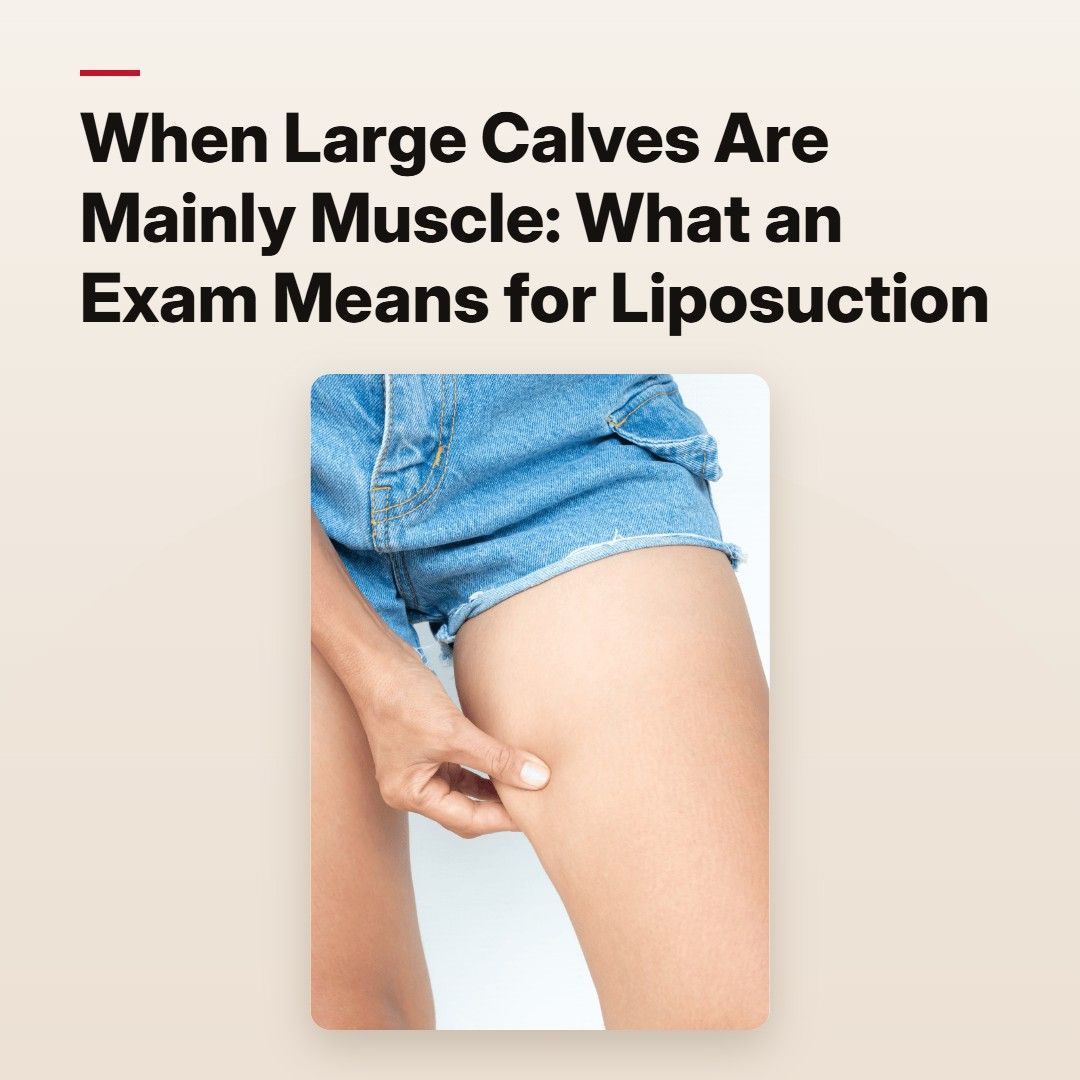
In some people, what looks like fat is mostly muscle. When the forearm muscles are well developed, liposuction may make only a small difference, because the fat layer is already thin. A simple test is to compare the forearm relaxed and with the fist clenched: muscle tends to firm up and change shape with contraction, while fat stays soft. Ultrasound can sometimes help measure the fat layer more precisely when the findings are unclear.
If muscle is the main contributor, it is worth knowing that surgery will not change it. Some people choose to adjust their training instead, focusing less on movements that build forearm bulk.
Considering the whole arm
The forearm is often treated in combination with the upper arm. Treating only the upper arm can leave the area just below the elbow looking relatively full, creating an uneven line. Treating only the forearm can have the opposite effect. Planning often includes:
- The area just above and below the elbow.
- The inner and outer sides of the forearm where fat is present.
- A gradual taper toward the wrist.
- Comparison with the other arm to keep both sides balanced.
Safety and technique
Because the forearm has important structures close to the surface, surgeons usually use fine cannulas and work cautiously. Removing too much fat can lead to visible dents, tightness or an unnatural look. Incisions are kept small and placed where they are least visible, often near the elbow crease. A conservative approach is common, with the aim of subtle smoothing rather than dramatic reduction. This is one area where less treatment often produces a better-looking result.
Recovery considerations
After forearm liposuction, swelling may make the hand and wrist feel tight for a while. Compression sleeves are commonly used, and keeping the arm elevated at times can help. Most people can use their hands for light daily activities quite soon, but heavy gripping, lifting and repetitive strain may be limited for a period. Any numbness, increasing pain or colour change in the hand should be reported promptly.
Rings, watches and tight bracelets are usually best removed before surgery and left off until swelling settles, since the hand and wrist can swell temporarily.
Questions to bring to your consultation
- Is my forearm fullness mainly fat or muscle?
- Could swelling or a medical condition be contributing?
- Would you treat my upper arm as well?
- How much change is realistic in such a small area?
- What restrictions will I have on hand and arm use during recovery?
A careful evaluation helps decide whether forearm liposuction is likely to give a worthwhile result for your arm. It is reasonable to ask how often the surgeon treats this area and to see examples, since experience with small, visible zones makes a real difference to how natural the result looks.