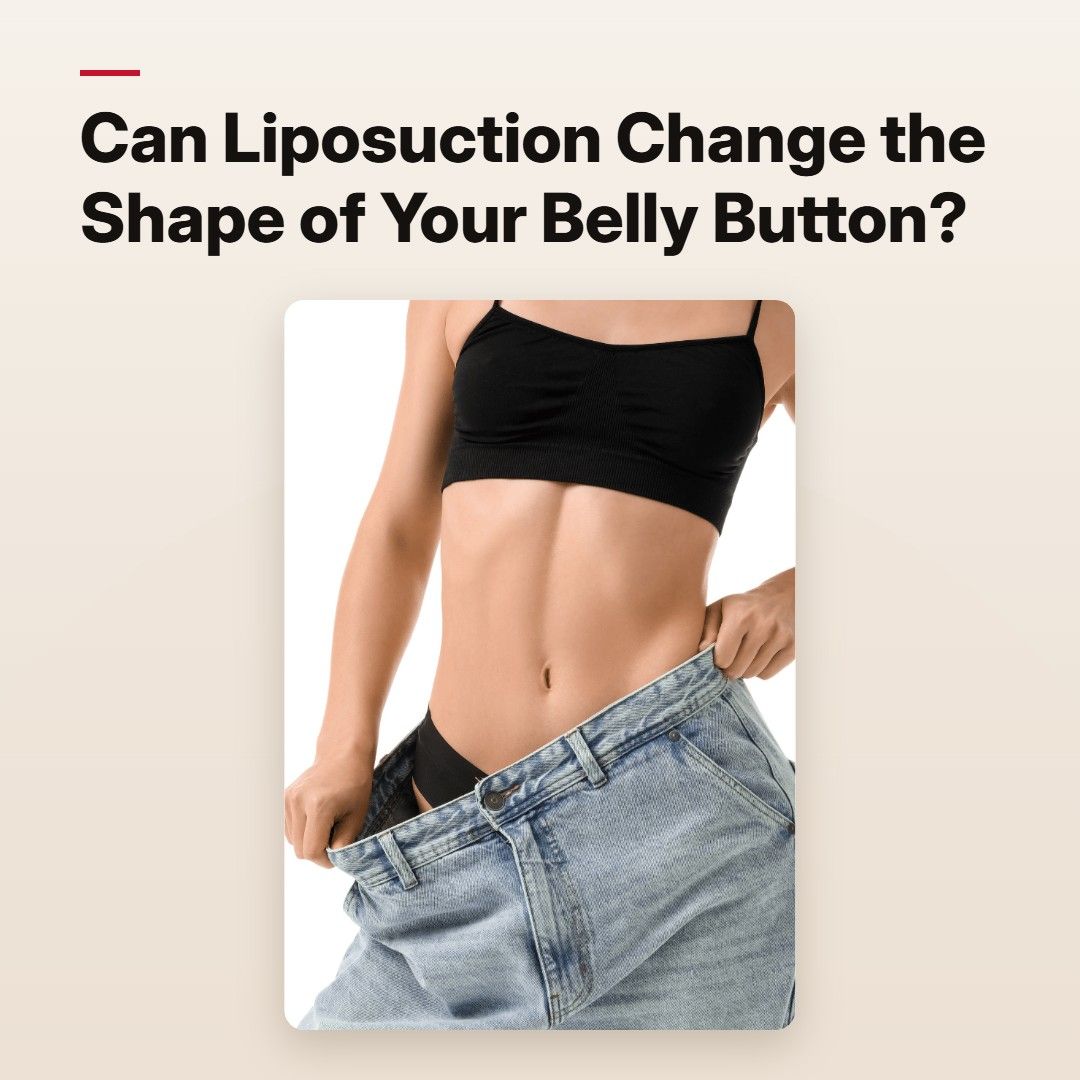
Why the belly button changes shape
The navel is a scar tethered to the abdominal wall, surrounded by skin and fat. Its appearance depends on how much fat sits around it, how much the skin has stretched, and how firmly it is attached underneath. Pregnancy, weight changes and ageing can make it look stretched, hooded, sideways or sunken. People often ask whether liposuction can restore a neater shape, and the answer depends on what is causing the change.
The navel is also very visible in swimwear and fitted clothing, which is why small changes in its shape can bother people more than larger changes elsewhere on the abdomen.
Common navel shapes people notice
Different appearances usually have different causes:
- Hooded navel: a fold of skin and fat sits over the top of the belly button.
- Horizontal navel: the opening looks stretched sideways, often after weight gain.
- Deep, buried navel: a thick fat layer surrounds the opening.
- Stretched or vertical navel: the skin has lost elasticity after pregnancy.
- Outie or bulge: sometimes an umbilical hernia rather than fat.
What liposuction can change
Liposuction removes fat around the navel, which can make it appear less buried and help the opening sit more naturally. When fullness above the belly button causes a hood, reducing that fat may soften the fold. In people with good skin elasticity, the skin can contract over the new contour so the navel looks more vertical and defined. The change is usually subtle, and it works best when fat is the main issue.
Results also depend on the rest of the abdomen. A navel that sits within a smoother, slimmer abdomen often looks more natural, even when the opening itself has changed only slightly. This is why surgeons usually think of the navel as part of the whole abdominal contour rather than as a separate target.
What liposuction cannot change
Some navel concerns are not related to fat at all:
- Loose, stretched skin around the navel will not tighten much after liposuction alone.
- A hernia needs its own repair and is not treated by liposuction.
- Scarring from previous surgery or piercings affects shape independently of fat.
- The underlying attachment point does not move.
In these cases a navel reshaping procedure, called umbilicoplasty, or a tummy tuck may be discussed instead.
How the area is examined
The surgeon looks at the navel while you stand, sit and lie down, because its shape often changes with posture. They pinch the tissue around it to estimate fat thickness and check skin recoil. Pressing gently and asking you to cough helps rule out a hernia. Photographs are usually taken from the front and side so the before-and-after shape can be compared.
Your surgeon may also ask how the navel looked before pregnancy or weight changes. Old photographs can be surprisingly helpful in setting realistic goals.
Planning around the navel
When liposuction is chosen, the area around the navel is treated with care:
- Fat is reduced evenly around the opening to avoid a lopsided appearance.
- Treatment blends into the upper and lower abdomen rather than focusing on one ring.
- Over-thinning is avoided, because it can make the area look hollow.
- Incisions may be placed in or near the navel to hide them.
The goal is a navel that looks proportionate to the surrounding abdomen rather than one reshaped in isolation.
Recovery and how the shape settles
Swelling around the navel is common for several weeks and can make the shape look uneven at first. Compression garments help the skin settle, although they should not press directly into the opening. Keeping the navel clean and dry is important during healing. The final contour usually becomes clear over a few months.
Some people notice a temporary change in skin colour or slight firmness around the navel as healing progresses. These changes usually fade, but any redness, discharge or increasing pain should be reported to the surgeon promptly, as they can be early signs of infection.
Questions to ask at consultation
- Is my navel shape caused mainly by fat, loose skin, or something else?
- Could there be a small hernia?
- Would liposuction alone improve it, or would umbilicoplasty help more?
- Where would the incisions be placed?
- How long until I see the settled shape?
Understanding the cause behind your navel shape is the best way to choose a treatment that actually addresses it.