What a C-section shelf is
A C-section shelf is the small overhang of soft tissue that sits just above a caesarean scar. Many people notice it months or even years after delivery, when the rest of the abdomen has settled but this one band still folds over the incision line in fitted clothing. It often looks like a simple pocket of fat, which is why liposuction is the first treatment people ask about. In reality, the scar underneath changes how the tissue moves and heals, so the scar itself is the starting point of every assessment. Understanding what the bulge is made of, before choosing a treatment, is what separates a natural result from a disappointing one.
Why the shelf forms
The shelf rarely has a single cause. Several factors usually combine:
- Scar tethering: healing can anchor the skin over the scar to the deeper layers, so the tissue above folds over it.
- Fat above the scar: the lower belly stores fat readily, and it gathers just above the fixed line.
- Loose skin: pregnancy stretches the skin, and not all of it recoils afterwards.
- Muscle changes: stretched abdominal muscles can let the lower belly push forward.
How the shelf is examined
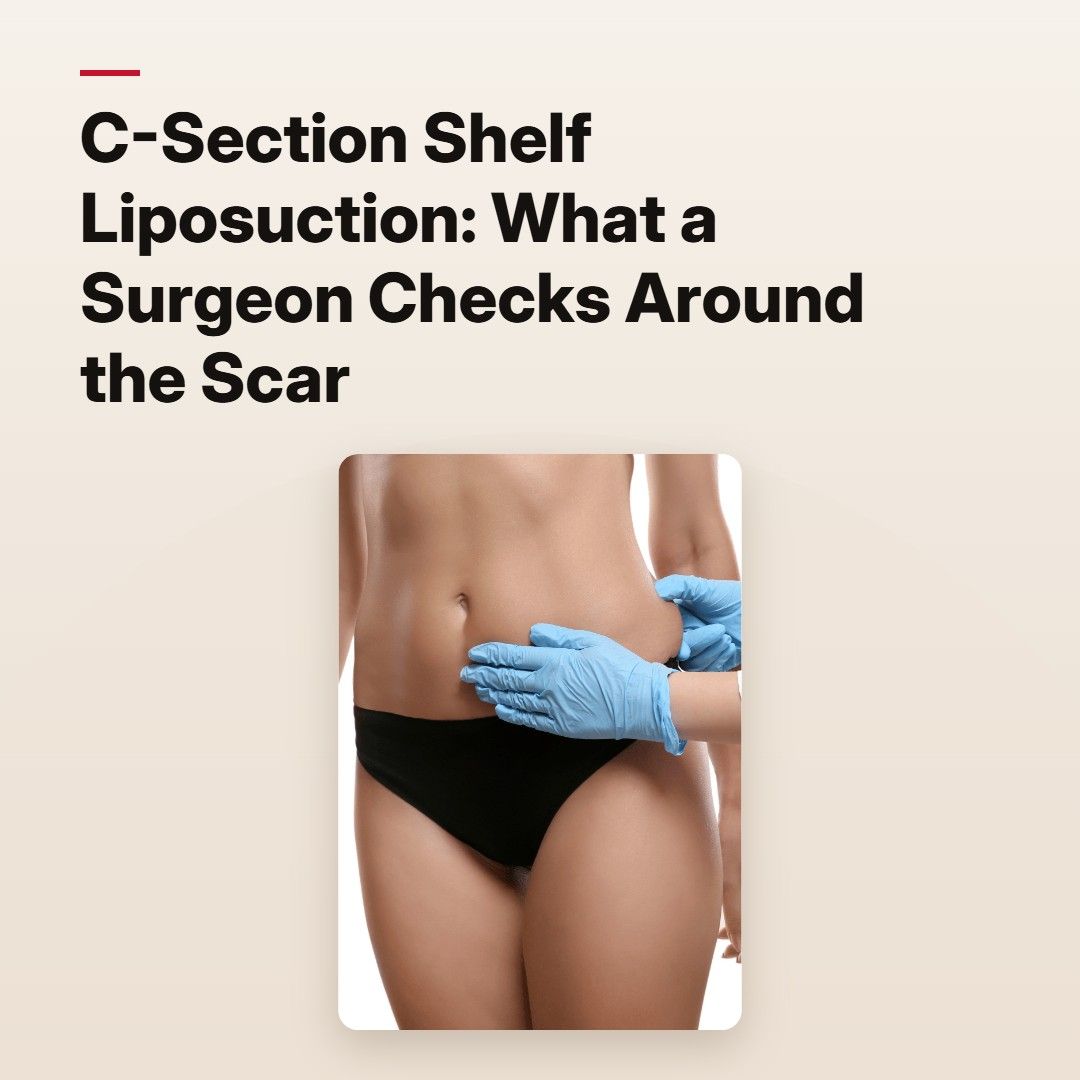
The examination usually starts with you standing, because gravity shows the overhang most clearly. The surgeon then watches how the fold changes as you lie down, sit and bend forward, and uses a gentle pinch test to compare the fat above the scar with the surrounding abdomen.
- If the fold almost disappears when you lie flat, loose skin and posture may be playing a large part.
- If a firm, pinchable layer remains in every position, there is more likely to be a fat component that liposuction can treat.
Reading the scar itself
The scar is assessed on its own terms, because its condition shapes what is possible nearby. Surgeons commonly look at:
- Maturity: a flat, pale scar behaves differently from one that is still red, raised or changing.
- Mobility: whether the scar glides over the deeper tissue or appears stuck down.
- Length and width: which affect where incisions and cannula paths can safely go.
- Timing: many surgeons prefer to wait until a scar has fully matured, often a year or more after delivery.
History that changes the plan
Your pregnancy and surgical history matter as much as the examination. Expect questions about:
- The number of caesarean deliveries and any complications, such as infection or slow wound healing.
- Other abdominal operations, including hernia repairs.
- Any bulge near the scar, because a hernia needs a different treatment and is not addressed by liposuction.
- Separation of the abdominal muscles (diastasis recti), often checked by pressing along the midline while you lift your head.
Skin quality and its limits
Skin elasticity is one of the most important factors in the decision. Liposuction removes fat, and the skin above it needs enough natural recoil to settle smoothly over the new contour. Stretch marks, thin skin, or skin that stays creased after a pinch suggest that recoil may be limited. When most of the shelf is loose skin, removing fat alone can make the overhang look emptier rather than flatter, and a surgeon may discuss a mini or full tummy tuck, or a combined approach, with honest trade-offs in scar length and recovery. Weight stability matters too: if you expect to lose or gain a significant amount of weight, most surgeons suggest waiting until it has settled, because later changes can alter the contour that was created.
How liposuction is planned around the scar
When liposuction is a reasonable choice, the plan focuses on blending rather than simply emptying the band above the scar. Common principles include:
- Treating a wider zone of the lower abdomen, and sometimes the flanks, so the result tapers smoothly.
- Avoiding over-removal directly above the scar, which can leave a step or dent.
- Discussing release of a tethered scar or a small amount of fat grafting to soften a groove, knowing results vary.
- Taking standardised photos so changes can be compared fairly over the following months.
- Explaining that swelling can hide the final shape for several months after surgery.
Questions to bring to your consultation
A useful consultation ends with a shared understanding of what is realistic for your body. It helps to arrive prepared:
- How much of my shelf is fat, and how much is skin or scar?
- Is my scar mature enough to treat around now?
- Would liposuction alone help, or would skin removal give a better result?
- How long will swelling last, and how long should I wear compression?
- How might a future pregnancy affect the result?
Bring any delivery records you have. A shelf above a C-section scar is very common, and a careful, scar-aware plan is what turns a reasonable goal into a natural-looking result.