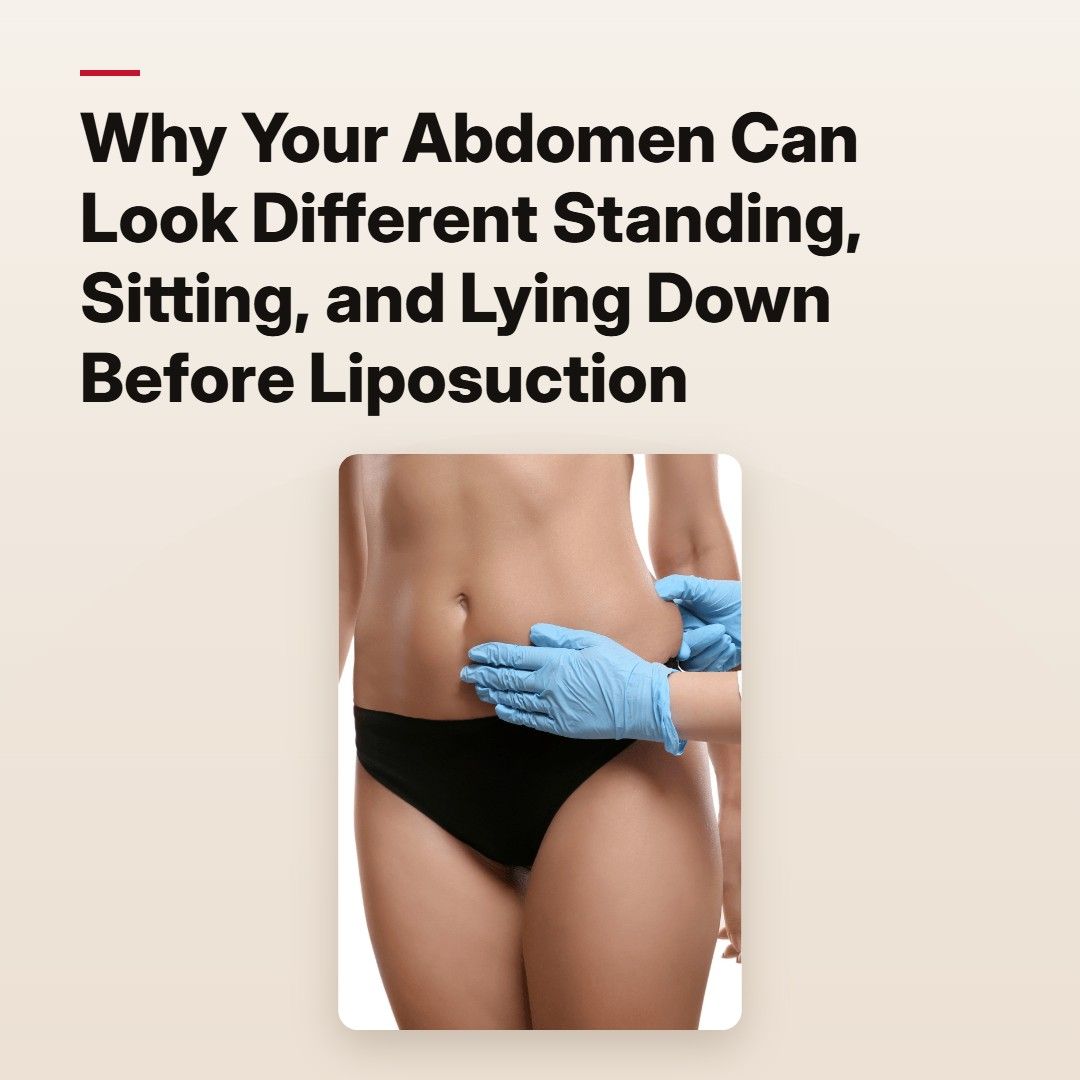
Why position matters in an abdominal exam
Most people judge their stomach in one position, usually standing in front of a mirror or sitting down and noticing a fold. Surgeons look at the abdomen in several positions because each one reveals different information. Gravity, muscle tension and skin laxity all change how the tissue sits. A belly that looks smooth when lying flat can show a clear roll when sitting, and a bulge that appears when standing may soften when the muscles relax. Seeing all of these views helps build a plan that works in everyday life, not just in one pose.
This is also why it is helpful to wear simple, fitted clothing to your consultation that can be adjusted easily as you change position.
What standing shows
Standing is the position in which gravity has the strongest effect. It helps the surgeon assess:
- How much the lower belly hangs or projects.
- Whether there is an overhang above a scar or the pubic area.
- How the waist and flanks blend into the hips.
- Your natural posture, including any forward tilt of the pelvis.
Standing photos are also the main way results are compared later, so they are usually taken under consistent lighting and angles.
What sitting shows
Sitting compresses the abdomen and folds the skin. This view is especially useful because it reflects how people often notice their stomach most, such as when wearing fitted clothes at a desk. When you sit, the surgeon can see the number and depth of rolls, whether skin creases cross the abdomen, and how much loose skin gathers in the lower belly. A person with good skin elasticity usually shows softer rolls than someone with stretched skin, even with the same amount of fat.
Sitting also reveals how the upper and lower abdomen interact. Some people have one deep fold at the level of the navel, while others have two smaller folds. The pattern helps the surgeon decide where to concentrate treatment and where to blend so that folds do not simply move to a new position.
What lying down shows
When you lie on your back, gravity pulls the tissue toward the sides and the abdominal wall relaxes. This view helps the surgeon:
- Judge how much of the bulge is fat and how much is muscle.
- Feel for separation between the abdominal muscles.
- Check for hernias, especially when you lift your head or cough.
- Mark areas of fat more precisely before surgery.
If your belly looks almost flat lying down but very rounded standing, posture, skin laxity or muscle tone may be playing a large role.
Bending forward and twisting
Some surgeons also ask you to bend forward or twist gently. Bending lets the skin hang away from the body, which shows how much excess skin is present and how it folds. Twisting reveals how the flanks and back rolls move and where creases form. These views are particularly helpful when deciding whether liposuction alone is likely to be enough or whether skin removal might be discussed.
These movements also show the surgeon how the skin will behave once some of the fat beneath it is removed. Skin that bounces back quickly after a pinch or a stretch tends to retract better after surgery.
Putting the views together
No single position tells the full story. The surgeon combines what they see to answer a few key questions:
- Is there enough pinchable fat to make liposuction worthwhile?
- Will the skin retract well over a smaller contour?
- Is muscle separation or a hernia contributing to the shape?
- Which areas need treatment to keep the whole torso balanced?
Your answers about which view bothers you most are also part of this picture. Two people with the same anatomy may want different priorities, and the plan should reflect what matters to you.
What this means for your expectations
After liposuction the abdomen will still change with position. Sitting will still create some folds, because skin needs room to bend. The goal is usually to reduce the size of those folds and improve the standing contour, rather than to create a stomach that looks identical in every pose. Discussing which position matters most to you, such as how you look sitting at work or standing in swimwear, helps the surgeon focus the plan.
Questions to ask at your consultation
- Which position shows my main concern most clearly?
- How much of my sitting roll is skin rather than fat?
- Does my posture affect how my stomach looks standing?
- Will you take photos in several positions?
- What changes should I expect in each position after recovery?
A multi-position exam gives you a realistic picture of what liposuction can change in the way you actually live and move.